
Diarrhoea (Inpatient) 💩
Inpatient guide to suspected infectious diarrhoea and vomiting: Bristol stool chart, SIGHT precautions, C. difficile severity, stool sampling, isolation, and when to refer.
🧭 Workflow
- Record baseline bowel habit on admission.
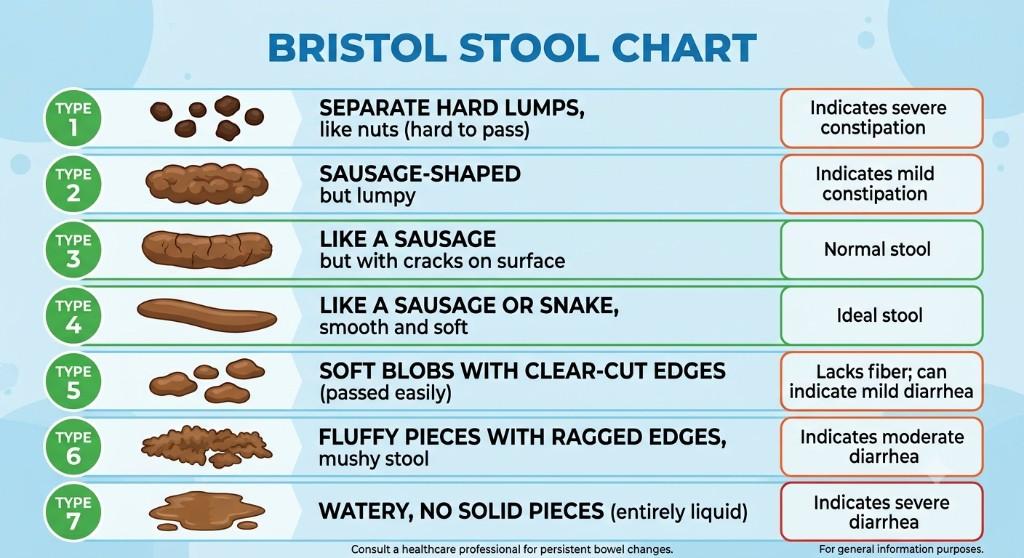
- Diarrhoea = Bristol Stool Chart (BSC) types 5–7, or loose enough to take the specimen container shape.
- Rule out non-infectious causes before sending stool (drugs, impaction, feeds, IBD flare).
- Sudden D&V without a clear alternative → source isolate immediately.
- If infective: SIGHT — Suspect, Isolate, Gloves/apron, Hand wash (soap & water; gel alone is not enough for C. diff/norovirus), Test stool.
- Fluids, electrolytes, chart BSC; notify IPC per local policy.
📊 Bristol Stool Chart
- Types 5–7 = diarrhoea. Types 3–4 = normal — chart type and frequency on the ward.
🚨 Red flags
- Haemodynamic instability.
- Severe abdominal pain, peritonism, distension, or toxic megacolon.
- Bloody diarrhoea with fever or toxicity.
- Neutropenic patient.
- Profuse diarrhoea with AKI or refractory electrolyte disturbance.
- Life-threatening C. difficile: hypotension, ileus, toxic megacolon, or severe colitis on CT.
🧠 Causes
- C. difficile — recent antibiotics, PPI, hospital exposure.
- Viral — norovirus commonest in hospital; send virology if suspected.
- Bacterial — Salmonella, Campylobacter (culture if indicated).
- Non-infectious — laxatives, drugs (metformin, magnesium), feeds, chemo/immunotherapy colitis, IBD, ischaemic colitis, overflow impaction.
💊 C. difficile: meds & treatment
- Stop if possible: precipitating antibiotics (discuss with micro), PPI, laxatives, prokinetics, loperamide, immunosuppressants, opioids.
- Review in dehydration: NSAIDs, ACEi/ARB, diuretics.
- Treat per local AMRIC protocol (oral vancomycin or fidaxomicin); do not await stool if high suspicion.
- No probiotics for C. difficile.
🧪 Assessment & sampling
- History: onset, BSC type/frequency, blood/mucus, vomiting, fever, antibiotics, baseline habit.
- Exam: vitals, hydration, abdomen; PR if needed.
- Bloods: FBC, U&E, CRP; lactate if unwell.
- C. diff suspected: stool MC&S + toxin/PCR same day.
- Prior C. diff ≤28 days: treat as positive without resampling.
- Norovirus: virology on stool (not vomit). Travel/endemic risk: add OCP.
- AXR/CT if severe pain, distension, or severe colitis concern.
🛡️ Isolation & management
- Isolate until 48 h asymptomatic and formed/normal stool for patient (confirm with IPC).
- C. diff: side room, dedicated toilet, gloves/apron, soap-and-water hand hygiene.
- Norovirus bay: isolate all affected in bay; close to new admissions per outbreak policy.
- Supportive fluids ± K/Mg; chart BSC. No loperamide in IBD or immunotherapy colitis.
- Staff with D&V: off work 48 h symptom-free.
☎️ Refer
- Severe/life-threatening C. diff, toxic megacolon, or surgical abdomen.
- Bloody diarrhoea with systemic upset.
- IBD flare, immunotherapy colitis, or diagnostic uncertainty.
- Persistent symptoms despite management, or possible outbreak — notify IPC.
Related NICE guidance
NICENICE NG199 — Clostridioides difficile infection: antimicrobial prescribing
Full guidance on nice.org.uk. BetterCall is not endorsed by NICE.
Note Template
Ready-to-use clinical note structure
🕒 11 / 10 / 2026 — 00:13

ATRP re: inpatient diarrhoea / vomiting
Patient: [age] [sex]
Location: [ward]
Admission Dx: [reason for admission]

💩 Stool history:
• Baseline bowel habit (when well): [frequency, normal BSC type]
• Onset & frequency: [__ stools/24 h; BSC types 5–7]
• Character: [watery / loose / bloody / mucus]
• Vomiting: [yes/no — do not send vomit for MC&S]
• Associated: [abdominal pain, fever, tenesmus]

📋 Risk factors & SIGHT:
• Infective cause suspected: [yes/no — clear alternative cause?]
• Source isolation commenced: [yes — time]
• Recent antibiotics / PPI / laxatives: [__]
• IPC team notified: [yes/no]

🩺 Assessment:
• Vitals: [HR, BP, temp — stable/unwell]
• C. diff severity documented: [mild / moderate / severe / life-threatening / N/A]
• Hydration & abdomen: [soft/tender/distended/peritonism]

🧪 Investigations:
• Bloods: [FBC, U&E, CRP, creatinine trend]
• Stool: [C. diff toxin/PCR + MC&S / virology / OCP — sent/pending/results]
• Imaging: [AXR/CT — indication and result / not done]

💊 Management:
• Fluids: [oral / IV — volume given]
• Medications stopped/reviewed: [antibiotics, PPI, laxatives, loperamide, NSAIDs/ACEi/diuretics]
• Treatment: [oral vancomycin/fidaxomicin per AMRIC — severity __ / supportive only]
• Isolation: [single room / bay isolation — 48 h rule discussed with IPC]

📌 Plan:
• [BSC chart, fluid balance, chase results, discharge/transfer precautions]

👤 [Your Name], [Role]
IMC: _______
Educational reference only. Medical disclaimer